
Everyone is talking about setting boundaries. There are so many perspectives about how to apply, strengthen, or soften them. What I hear less often is about the boundaries within our minds. The mind is said to have thousands of thoughts per day; this means your mind and thoughts are constantly going and most often unchecked. Most people have varying degrees of self-criticism, negative self-talk, unhealthy beliefs, etc. The list is endless here. Literally, you can think of anything, real or imagined. However, we hear concepts about managing thoughts by practicing Cognitive Behavioral Therapy or just therapy in general. We all have thoughts we would rather not have or spend time thinking about. So, what do we do about it?
Skills to set your own mental boundaries
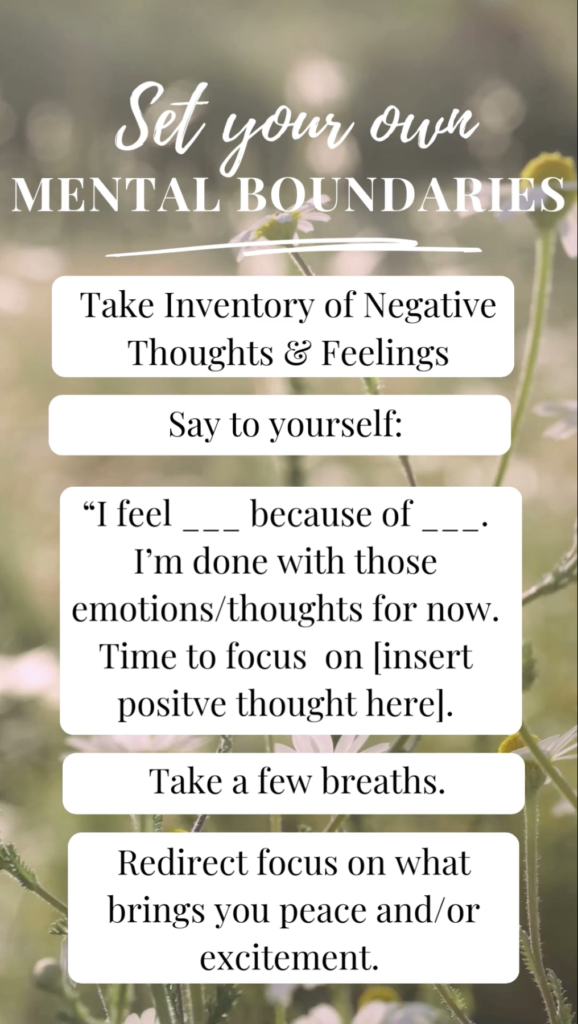
This means you take inventory of thoughts and emotions. Identify what brings you joy and what makes you feel the opposite. Usually, the not-so-good emotions are the ones you will need to set limits for. You begin to do this consciously, recognizing you have started to feel bad, angry, sad, etc. For one second or a minute at most, review the thoughts or beliefs. Acknowledge I feel X because of X. Say to yourself now I’m done with those feelings for now. Now to focus on [insert happier more positive thoughts].
Easier said than done, is what I hear most often. Truth is, it’ll feel hard and ineffective at times, depending on how strongly you feel. The trick is repetition and consistency. Once you have created a habit of doing this it will become easier and eventually automatic.
This does not mean you just ignore everything; this simply means, for the purpose of my day, I will not become consumed or taken down by these negative thoughts/beliefs. I always encourage to allow time to process the day by journaling, talking to ourselves, or allowing for emotions to come up when it feels safe to do so. For example, you can do these things if you have time in the morning and then add some minutes to your routine. Sometimes its easier at the end of the day after you have winded down and can have some time alone with your thoughts. You decide when is best for you.
Here is an example, if I’m stressing about a work presentation and it keeps popping up in my mind. I think of all the things that could go wrong, what my boss will think, will I start stuttering, what if I forget, etc. There is absolutely no need for me to think about any of these things for more than a few seconds. It’s miserable, emotionally draining, and unproductive. The best thing is to recognize what direction I am going in and notice it and choose a completely different area of focus or be proactive and spend more time preparing and practicing to increase confidence and trust that I will do great because I’m prepared.
We have choices about how we choose to think and where we put our attention. Imagine you’ve been driving on one road, and you’ve reached a fork in the road. The road you have always traveled may be the path you frequently take where you often lose your patience. You could continue to keep going the way you have always gone or consider the new road that leads to the desired destination, offering a potentially easier path. This is where you might say, “I usually lose my temper when I’ve lost my patience. The new road gives me a 10-minute delay that allows me to calm down and I don’t end up blowing up.” You will feel better because you did not have to lose your temper. Remember, you always have a choice about how you will react or feel. The new path is another opportunity to experience something differently and determine if it’s right for you. Practice is everything. We are human, and by nature, we are designed to have intense emotions, but we don’t have to let our difficult emotions get the best of us. Intense emotions can be moved through quickly.
The path to peace is often encountered when we can effectively manage our mood, thoughts, and reactions. The mental and emotional boundaries we set can lead us to more moments of peace, happiness, and more of what we do want in our lives. Boundaries within ourselves is part of the path of self-mastery and truly healing.